

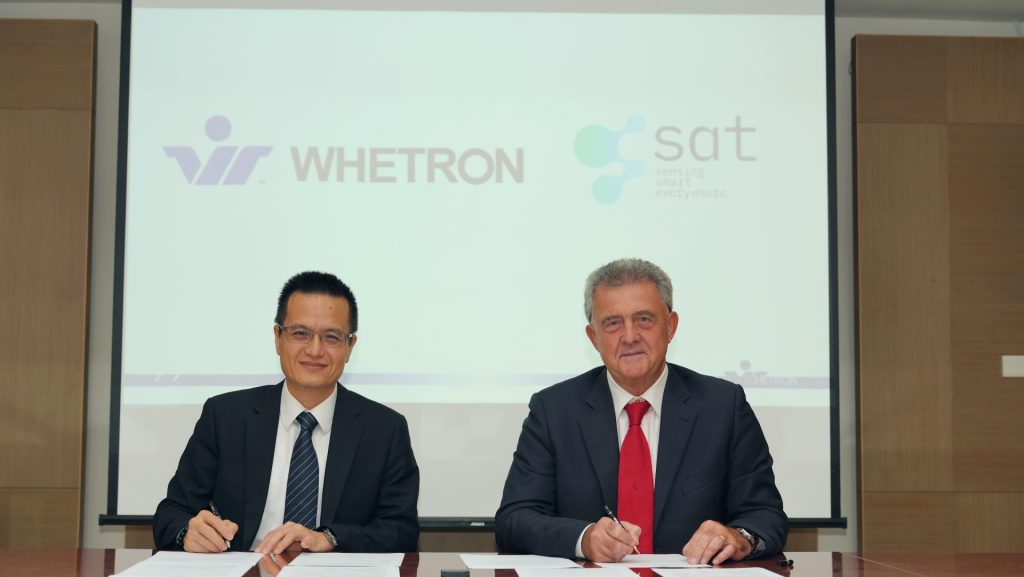
Whetron Electronics Co., Ltd. (TWSE: 6722) and Sleep Advice Technologies S.r.l. (SAT) of Turin, Italy, today signed a multi-year agreement to develop in-cabin driver monitoring capabilities combining Whetron’s sensing hardware with SAT’s physiological prediction algorithms. The two companies separately signed a memorandum of understanding recording their intention to extend the collaboration into camera-based cardiorespiratory research.
The signed agreement runs to 2028 and covers three areas of joint work: a proof of concept combining Whetron’s in-cabin radar sensing with SAT’s patented drowsiness prediction algorithms, validated against medical ground truth; research to extend that capability towards robust in-cabin deployment; and exploratory work on an interpretable indicator of driver stress derived from non-contact physiological signals.
Whetron brings automotive-grade in-cabin sensing hardware and system integration; SAT brings its Predictive Intelligence Layer for the prediction of vigilance degradation, fatigue and drowsiness from physiological signals. Under the collaboration, Whetron is responsible for the sensing chain and SAT is responsible for the physiological interpretation, with each company building on its own established strengths.
Regulatory and safety-assessment context
Driver monitoring is moving from a differentiator to a requirement. Euro NCAP’s published roadmap sets out increasing expectations for the assessment of driver fatigue and impairment through the remainder of the decade. Euro NCAP has signed a Letter of Intent with SAT for technical collaboration on the objective assessment of drowsiness and impairment.
“Our customers are asking for in-cabin sensing that does more than detect where the driver is looking,” said Lin Jun-Nan, Chief Technology Officer (CTO), Whetron Electronics. “Working with SAT lets us pair our sensing hardware with algorithms that have been developed and validated over years of research. It is a step in our move from component supplier towards integrated sensing systems.”
“Whetron is a serious automotive supplier with real production experience, which is exactly what this technology needs to reach vehicles,” said Riccardo Groppo, CEO, Sleep Advice Technologies. “This collaboration takes our algorithms from the laboratory into the cabin, on hardware designed for the automotive environment.”
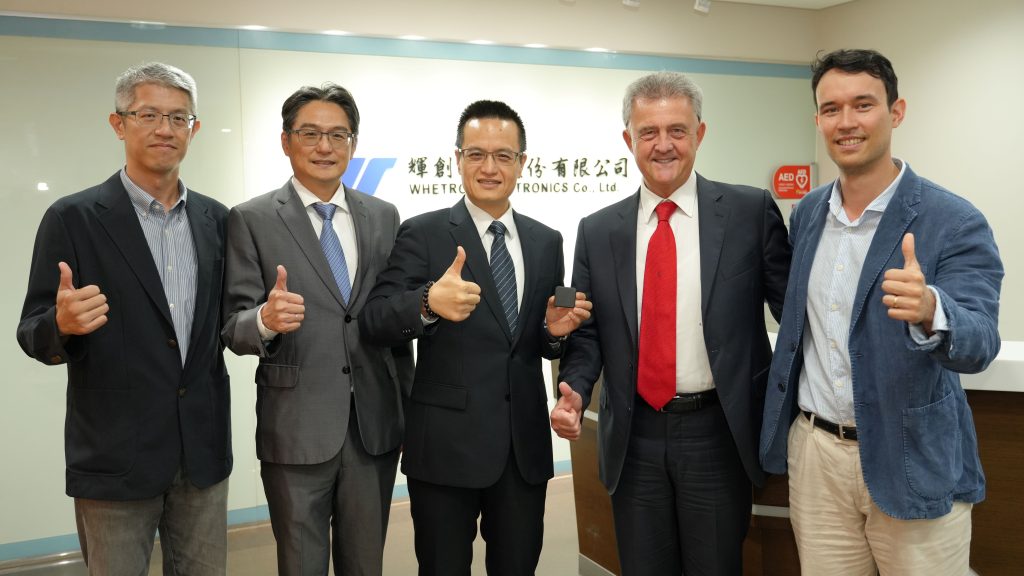
Beyond the vehicle: human-state sensing for robotics and embodied AI
Both companies see the capability being built as extending well beyond the passenger car. The vehicle cabin is a demanding first proving ground — a confined space, a moving platform, and a person who must stay fit to act — but the underlying problem is general. Wherever a machine works alongside a person, the machine’s decisions are only as good as its understanding of that person’s state.
What makes the work transferable is the architecture. SAT’s Predictive Intelligence Layer is sensor-agnostic by design, interpreting physiological, motion and contextual signals independently of the sensor that captured them. The interpretation layer developed for the cabin can in principle be applied to signals from other sensors in other settings, including industrial robotics, autonomous mobile machinery and embodied AI systems. Whetron’s sensing and system-integration capability, built to automotive qualification standards, is similarly relevant wherever equipment must operate dependably around people.
The direction of regulation and standards points the same way. The EU Machinery Regulation, applicable from January 2027, brings AI safety components and autonomous mobile machinery into scope, and the 2025 revision of the ISO 10218 robot safety standards absorbed the requirements for collaborative applications that previously sat in a separate specification. Machines are being asked to take more responsibility for the people around them.
Both companies believe this matters commercially as much as technically. A machine that understands the state of the person beside it can be trusted to work closer, with less physical separation, on more valuable tasks. Accurate understanding of human physiological and cognitive state is therefore not a safety feature bolted on at the end — it is one of the conditions under which robotics and embodied AI can be accepted and deployed at scale. The companies intend to review this wider direction as the collaboration progresses.
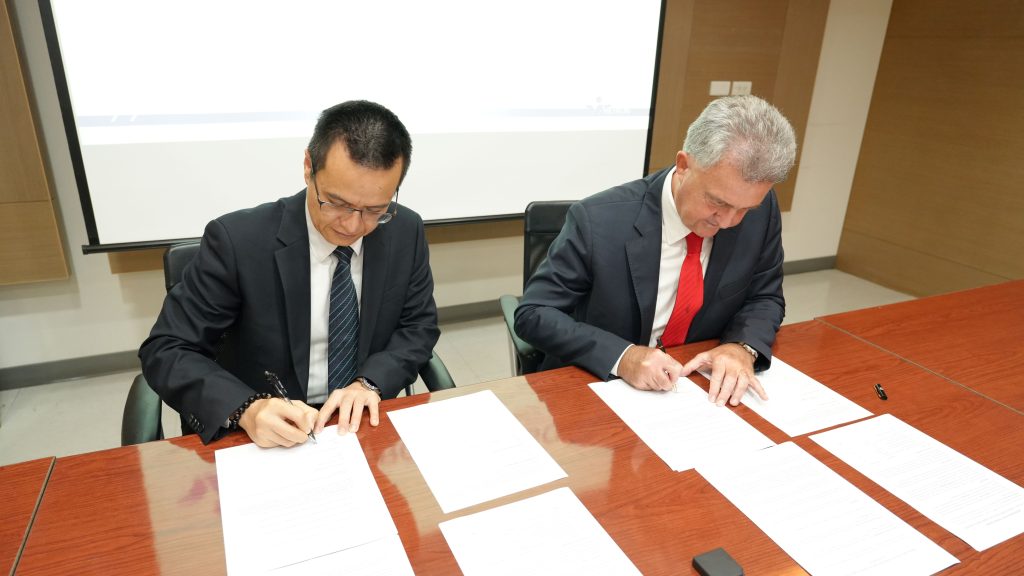
Cardiorespiratory research
Separately, the companies signed a non-binding memorandum of understanding recording their intention to explore whether cardiorespiratory rhythm information can be derived in the cabin using camera-based remote photoplethysmography, combined with a rule-based analysis framework developed by SAT with Politecnico di Torino. Any such work would be exploratory research, would be subject to a separate agreement, and is not expected to begin before 2028.
The companies emphasise that this research would not constitute a medical device, would not provide any diagnosis, and is not intended to support any clinical claim.
About Sleep Advice Technologies S.r.l.
Sleep Advice Technologies (SAT) is an Italian deep-tech company developing a Predictive Intelligence Layer for human-state assessment. SAT’s sensor-agnostic software transforms physiological, motion and contextual signals into early indicators of fatigue, vigilance degradation, drowsiness, impairment and other safety-relevant conditions. Its technology is designed for integration across wearables, cameras, radar and embedded systems, and has been validated through laboratory, simulator and real-world automotive activities. By adding prediction of the driver’s state to vehicle intelligence, SAT helps close the loop between vehicle and human intelligence, enabling the vehicle to understand not only the road ahead, but also the human behind the wheel.